
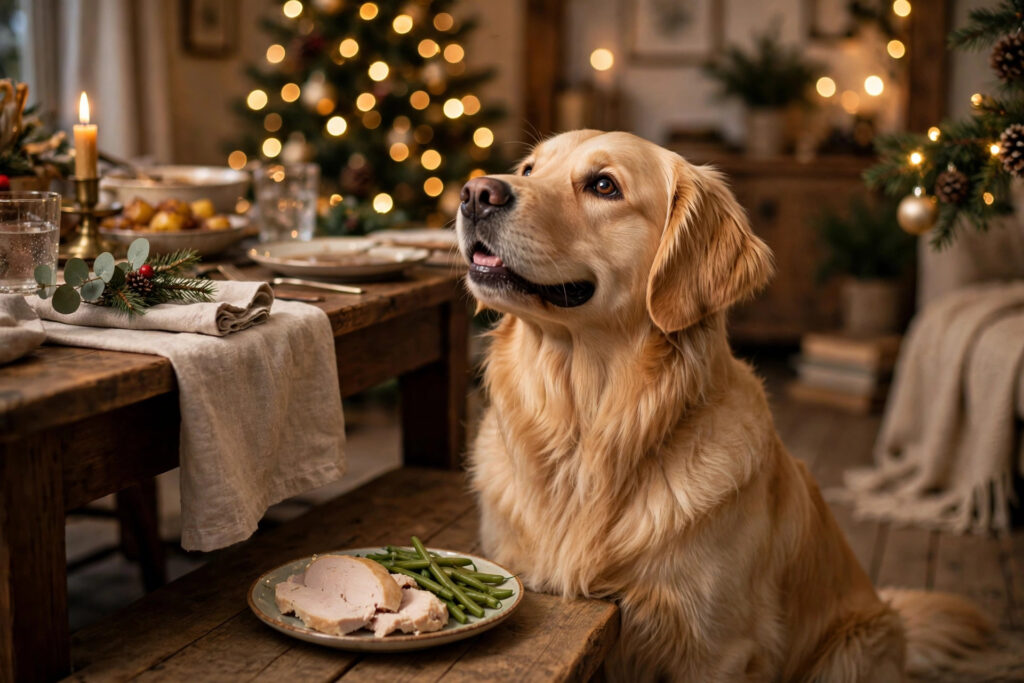
Picture it: the tree’s lit, the house smells like roast turkey and cinnamon, and under the table there’s a pair of eyes locked on you. Unblinking. Hopeful. Completely convinced that if they just keep staring long enough, a piece of Christmas dinner will somehow float down.
Here’s the good news — some christmas foods dogs can eat without any trouble at all. The bad news? A few of the most traditional ones on the table could land you at the emergency vet on Christmas night, when your regular vet is closed and the waiting room is full of other people’s dogs who ate the same thing.
So let’s sort it out before the chaos starts. One rule covers nearly all of it: plain, unseasoned, small portions. It’s the butter, salt, sugar, gravy and seasoning that turn a safe food into a dangerous one. That goes for Christmas exactly like it does for Thanksgiving — if you haven’t read it yet, our Thanksgiving foods guide runs on the same rule, and it’s worth a look before the holiday cooking starts.
Christmas Foods Dogs Can Eat
So what christmas foods dogs can eat without worry? Start with this list.
The good stuff first. Every food below is fine as long as it’s plain — no butter, no oil, no salt, no garlic, no onion, no spices — and served in a modest amount. Treats, holiday or otherwise, should stay under about 10% of your dog’s daily calories, so think “a few bites,” not “a second dinner.”
Plain turkey meat. Boneless, skinless, fully cooked white meat is the safest protein on the Christmas table, and most dogs lose their minds over it. Set a few pieces aside before you add any rub, glaze or gravy. Skip the skin, the drippings and anything brined or heavily seasoned.
Plain vegetables. Carrots, green beans, peas and plain boiled or baked sweet potatoes are all easy wins, raw or cooked. Brussels sprouts are fine too, cooked and plain — though fair warning, they can make a gassy dog even gassier, so go easy. A plain boiled potato is fine as well; the mashed potatoes on your table, whipped with butter, cream, salt and probably garlic, are yours, not the dog’s.
Plain pumpkin. The pure cooked kind — the can should say “pumpkin” and nothing else — is fiber-rich and easy on the stomach. It’s a great little addition to a holiday plate, and it doubles as a settle-the-stomach food if the day gets chaotic.
Apples and cranberries, with a catch. Sliced apple, seeds and core removed, is a sweet, crunchy snack most dogs love. Fresh cranberries aren’t toxic either, but they’re so tart most dogs take one sniff and walk away. Skip the cranberry sauce — the jellied kind is basically dessert, and the whole-berry kind is usually loaded with sugar.
Plain eggs. A bit of plain boiled or scrambled egg, no butter or seasoning, is a solid protein-rich extra. It’s also a handy one if you need to make the dog’s own little plate in a hurry.
If you’d rather not overthink it, build the holiday plate around food you already trust — your dog’s regular food — with a few of the safe extras above on the side. And if you want treat ideas you can rely on all year, our guide to the best training treats for dogs is a safer bet than anything from the dessert table.
Christmas Foods That Are Toxic or Dangerous for Dogs
Knowing what christmas foods dogs can eat is only half the job — the other half is knowing what to keep away.
Now the other list. Keep this stuff far away, and make sure your guests know the rules — most holiday accidents happen because a well-meaning visitor sneaks the dog a plate when nobody’s looking.
Chocolate, in every form. Theobromine and caffeine make chocolate toxic across the board, and dark and baking chocolate are the worst offenders. At Christmas the risk multiplies: chocolate Santas, advent calendar doors, tree ornaments, stocking candy and the box of chocolates someone leaves on the coffee table. Keep all of it up high and out of reach.
Fruitcake, Christmas pudding, mince pies and anything with dried fruit. This is the one that catches people out, because it doesn’t look dangerous. Grapes, raisins, sultanas and currants can cause sudden kidney failure in dogs, even in small amounts — and Christmas baking is full of them. One mince pie is enough to be a vet call.
Stuffing and gravy. Traditional stuffing is packed with onion and garlic, rich broth, butter and herbs. Gravy is usually the same story, plus a lot of fat and salt. Onions, garlic, leeks, chives and scallions — the whole allium family — damage dogs’ red blood cells, raw, cooked or powdered. Since onion and garlic powder hide in so many holiday dishes, “just one bite” of a seasoned dish is never worth it.
Cooked bones, turkey skin and fatty scraps. Cooked bones splinter, which means choking, torn mouths, blockages or tears in the digestive tract. Turkey skin and fatty scraps are a different kind of danger: rich, greasy food can trigger pancreatitis, a painful inflammation of the pancreas that can turn life-threatening fast.
Ham and cured meats. Ham, bacon, sausage and pigs in blankets are salt and fat bombs. Same pancreatitis risk as the other rich stuff, plus enough salt to cause serious thirst, vomiting and worse in a small dog.
Eggnog and alcohol. Eggnog combines three problems at once — alcohol, nutmeg and dairy — and even small amounts of alcohol can poison a dog. That includes boozy desserts and sauces, not just the drinks. Don’t leave glasses where a curious nose can reach them.
Nutmeg and pumpkin pie spice. Nutmeg contains myristicin, which is toxic to dogs — disorientation, racing heart, even seizures in larger amounts. It’s hiding in pie spice blends, eggnog, gingerbread and plenty of Christmas desserts.
Xylitol and sugar-free candy. Xylitol (sometimes listed as birch sugar) shows up in sugar-free candy, gum, candy canes and some baked goods. It’s extremely toxic — it can crash a dog’s blood sugar and cause liver failure. If something says “sugar-free,” read the label before it gets anywhere near the dog.
Macadamia nuts — and nuts in general. Macadamias are toxic even in small quantities, causing weakness, vomiting and tremors. Other nuts are usually just fatty, salty or a choking risk, so the simplest rule is: no nuts from the Christmas table at all.
Raw yeast dough. It keeps rising in a warm stomach, and the fermenting yeast produces alcohol. Bloating plus alcohol poisoning is a brutal combination, so keep rising dough well away from counter-surfers while you bake.
One distinction worth making: not everything on this list is poisonous in the same way. Chocolate, grapes and xylitol are genuinely toxic. Ham, gravy and skin are “not poisonous, but still dangerous” — rich and salty enough to cause real harm. Either way, they all stay off the dog’s plate.
Tips for a Dog-Safe Christmas
A little prep goes a long way:
Brief your guests. Seriously, say it out loud before dinner: “please don’t feed the dog from your plate.” Most accidents are a kind relative slipping scraps under the table.
Make the dog their own plate. Set aside some plain turkey, green beans and pumpkin before you season everything. It feels festive, it stops the begging, and for the rest of the day you can fall back on treats you already trust.
Watch the tree and the gifts, not just the table. Chocolate ornaments, advent calendars, stocking candy and wrapped food gifts are all at nose height. Tinsel and ribbon are a separate hazard — if swallowed, they can cause intestinal blockages. Keep food gifts up high until they’re opened, and check what fell under the tree after the unwrapping chaos.
Secure the trash. A Christmas trash can is a minefield — bones, foil, string, wrapping paper, fatty scraps and the packaging from all that chocolate. Tie it shut or shut the door on it.
Keep the dog out of the kitchen during crunch time. Raw dough, butter sticks, chocolate, unattended platters — it’s all at snout height when you’re distracted by ten other things.
Give them a quiet spot. A house full of people, strange smells and doorbells going off is a lot. A calm room with their bed lets them decompress when it gets to be too much — and if your dog struggles with the noise side of the holidays too, our NYE fireworks calm-dog playbook covers the same decompression idea for the loudest night of the year.
Frequently Asked Questions
Can dogs eat Christmas ham?
No — not even a little, if you can help it. Ham is extremely salty and fatty, and that combination can trigger pancreatitis or serious stomach upset. Plain turkey is the safe swap.
Can dogs eat Christmas pudding or fruitcake?
No. Both are packed with raisins, sultanas and currants, which can cause kidney failure in dogs, plus alcohol in many recipes. Keep them completely out of reach.
Can dogs eat stuffing?
No. Traditional stuffing contains onion and garlic, both toxic to dogs, along with butter and rich broth. Even a small serving isn’t worth the risk.
What christmas foods dogs can eat as a full holiday meal?
Keep it simple: a few bites of plain turkey, some plain green beans or carrots, and a spoonful of plain pumpkin, served alongside their regular food. That’s a festive plate without any of the risk — and it keeps treats well under that 10% rule.
What should I do if my dog eats something toxic at Christmas?
Don’t panic, but don’t wait either. Figure out what they ate and how much, then call your vet right away. If your vet is closed for the holiday, call ASPCA Animal Poison Control at (888) 426-4435 or Pet Poison Helpline at (855) 764-7661. Don’t wait for symptoms to show up, and never try to make your dog vomit at home unless a vet or poison-control expert tells you to.
Can dogs eat candy canes?
No. Candy canes are pure sugar, and the sugar-free ones may contain xylitol, which is extremely toxic. The sharp broken pieces are a hazard too. Stick to dog treats.
Your dog can absolutely be part of Christmas. Plate up a little plain turkey and veggies before the seasoning starts, keep the dangerous stuff out of reach, tell your guests the house rules, and check under the tree after the presents are opened. Unsure about a dish? Skip it — your dog will be just as happy with dinner as usual plus a couple of safe extras.
And if you’re planning ahead for the rest of the holiday season, the same thinking applies on New Year’s Eve — just with noise added to the food chaos. That’s exactly what our fireworks playbook is for.
The short version of what christmas foods dogs can eat: plain turkey, plain veggies, plain pumpkin — and nothing seasoned, sweet, fatty or raisin-filled.