
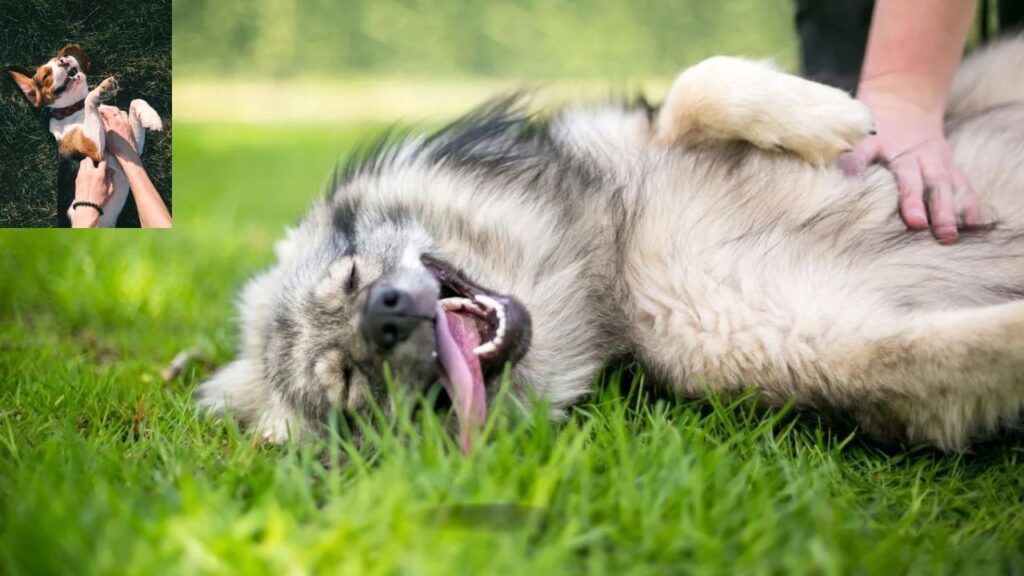
If you’ve ever watched your dog flop onto their back with those pleading eyes and thought, “Tell me why do dogs love belly rubs,” you’re not alone. That belly-expose moment is one of the purest, mess-free displays of trust a dog gives. But it’s not always an invitation — and if you misread it, you can make a confident, bonded dog uncomfortable or escalate anxiety in a shy pup.
This article explains, plainly and with the science-friendly sources behind it, why dogs love belly rubs — and when they don’t — so you stop guessing and start giving belly rubs that actually help your dog feel better.
TL;DR (for the impatient)
Dogs often enjoy belly rubs because of sensitive nerve endings, release of pleasure hormones (endorphins/oxytocin), and the social bonding it mimics.
Not every belly-up is a request — it can be appeasement/submission or a sign of anxiety. Read body language first.
Dogs kick during rubs because of an involuntary scratch reflex — not because they don’t like it.
How to do a belly rub: let the dog invite it, move slowly, watch the tail and eyes, stop if tension appears. (Step-by-step below.)
The short science: what physically happens when you rub a dog’s belly
By rubbing the belly of a dog softly, you are touching a place with a high concentration of sensory nerve endings and soft fur, the feel will be very strong and good in the nervous system. The fact that the tactile sensation can release endorphins (natural pain-relieving/feel-good chemicals) and oxytocin (the hormone that bonds people) is the same hormones that is released when people hug or cuddle. And that is one of the reasons why belly brushes are so appealing to most dogs.
Meanwhile, other dogs demonstrate the well-known scratch reflex when being rubbed on the belly, you will observe the kick of the back leg. It is an automatic spinal reflex that has developed to attempt to eliminate irritation (such as fleas) does not imply discomfort. The vast majority of dogs love the feeling when kicking.
Why do dogs love belly rubs (broken down into real reasons)
Pleasure from touch — soft belly fur + exposed skin = stronger tactile feedback than a shoulder pet. That’s pleasant.
Bonding, social grooming instincts — the interaction resembles social grooming from pack life; consistent physical affection builds trust.
It can reduce stress — petting lowers stress hormones in many dogs, which helps anxious pups calm down when the touch is welcome. Studies and shelter programs show that petting can calm dogs quickly.
Itch relief — dogs sometimes can’t reach their belly easily; a human hand provides satisfying relief.
Attention-seeking / learned behavior — if you always respond to a belly flop with laughter and attention, your dog may do it more because it works. (Nothing mystical — reinforcement.)
Important caveat: Not every belly-up is “rub my belly”
This is crucial and where people screw up. Dogs show their belly for at least two very different reasons:
Invitation for contact — loose body, happy wiggle, relaxed mouth, wagging tail: that dog wants affection. Rub away.
Appeasement or submission — tense body, low posture, tucked tail, lip-licking, avoiding eye contact: the dog is trying to say “I’m not a threat” or is stressed. Touching under those circumstances can worsen anxiety.
If you can’t confidently read the body language, don’t invade the belly — offer a chin scratch or side pat instead and let the dog come back on their terms.
How to tell — quick body-language checklist
If you want to answer why do dogs love belly rubs for your dog specifically, watch for these signals:
Good-to-rub signs
Body is loose and wiggly
Tail relaxed or wagging (not tucked)
Mouth relaxed, tongue lolling or soft panting
Rolling onto back toward you, often looking at your face
Not-wanting-it signs
Freeze, tense muscles, tight face
Tail tucked, lips pulled back, yawning, lip-licking
Avoiding eye contact, cowering, whining
When in doubt: let the dog set the pace.
How to give a belly rub the right way (step-by-step)
Ask for permission with posture — crouch to their level; don’t loom. Extend a flat palm, let them sniff.
Start slow — gentle circular strokes near the chest or ribcage first; watch if they relax more.
Move to the belly only if they invite you (flop, wiggle, relaxed eyes).
Avoid sudden deep grabs — they’ll flinch if surprised.
Target the sweet spot — gentle circular motions where the skin/fur is soft; some dogs have sensitive patches.
Watch for the kick — it’s normal; keep going if the dog stays relaxed.
Stop at first sign of tension — if the body stiffens, stop and give space.
Reward calm — if you want more of the behavior, calm praise or a small treat reinforces it.
This practical approach answers why do dogs love belly rubs with behavior change: you give them the good feelings without overstepping.
Also, check- Best dogs for first-time owners
Breed, age, and temperament differences
Puppies often enjoy belly rubs as a form of social play and exploration.
Some breeds with sensitive chests (greyhounds, short-coat sighthounds) may dislike belly contact — individual preference matters more than breed generalization.
Rescue or formerly abused dogs may reveal their belly as submission; don’t assume it’s a request for touch. Let them lead.
Mistakes owners make (and how to stop doing them)
Forcing belly contact when the dog is telling you “no.” Stop doing this. Respect is a two-way street.
Reading a belly-up as weakness — some people misinterpret submission and get rough; that destroys trust. Be kind and consistent.
Assuming all dogs are the same — preferences vary. Stop projecting.
Be honest with yourself: if you’re forcing contact to “bond,” you’re doing it wrong. Bonding happens when the dog feels safe, not when you demand access.
Training tip: use belly rubs as reinforcement — but smartly
The short, serene belly rub can be used as a reward to a settled sit or calm greeting, when your dog likes belly rubs. Use keep short and good to ensure that it is a reward, but not a pain. When the dog is over stimulated, use a less stimulating reward (treat, chin scratch).
FAQs — short, solid answers
Q: Why do dogs kick during belly rubs?
A: It’s the scratch reflex — an involuntary spinal reflex that’s harmless and often pleasurable.
Q: My rescue dog shows belly a lot. Does that mean they love me?
A: Not automatically. Rescued dogs sometimes show appeasement more than invitation. Build trust slowly and read the whole body.
Q: Are belly rubs unhealthy?
A: No, not naturally. But if the skin is sore, infected, or the dog reacts negatively, stop and consult your vet. Otherwise, a gentle touch is fine.
Q: How often should I belly rub my dog?
A: When they ask for it. Frequency should be driven by your dog’s comfort, not your desire.
Final, blunt takeaway (because I’m not sugarcoating this)
If your dog wants belly rubs, they get real physiological and emotional benefits from them — pleasure, bonding, stress relief. But do not treat every belly-up like an automatic yes. Read the signals. Respect the difference between trust and submission. If you can’t tell the difference, don’t touch the belly.
You asked why do dogs love belly rubs. The honest answer: for many dogs, it feels great and strengthens the relationship. The responsibly honest follow-up: you need to be the adult who reads the room. The dog can’t Google body language — that’s your job.
Insta- The Dogs USA