
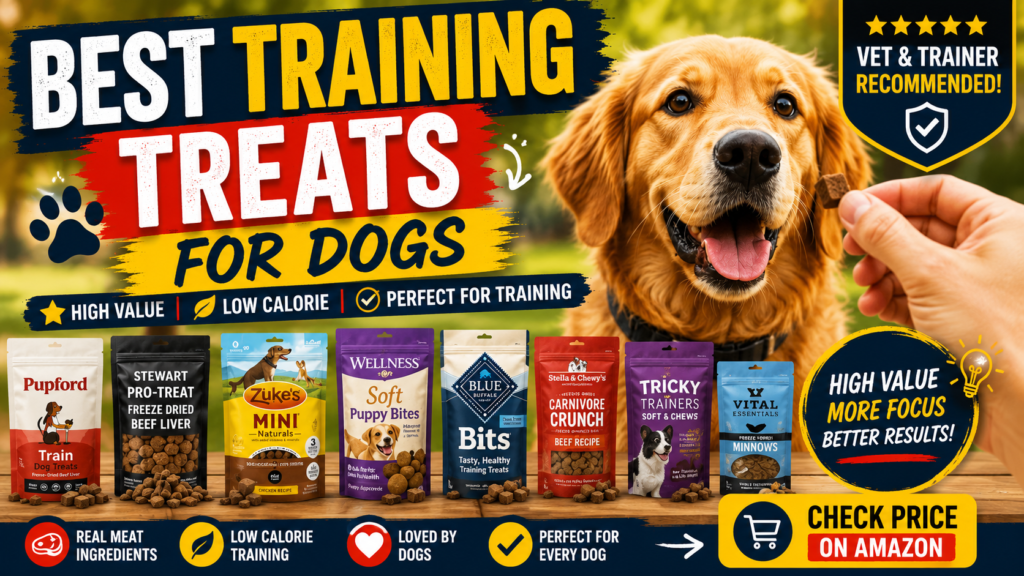
Small, protein-rich, high-value treats work best (like freeze-dried liver or chicken). Keep them bite-sized and low-calorie – treats should be ≤10% of daily calories. Use super-tasty rewards for learning new commands, then switch to milder ones (even kibble or veggies) for routine practice. Rotate treats to stay effective and always confirm ingredients with your vet.
Best Training Treats for Dogs: Vet-Approved, Low-Calorie Rewards
Training your dog can be rewarding and fun, but only if the treats you use do their job. We know you want real results: faster learning, a happy pup, and no extra belly weight. This guide cuts through the noise. In the next sections, you’ll find exactly what to look for in the best training treats, what vets say, and how pros use them – plus mistakes to avoid. We’ll cover nutrition (high protein, low filler), portion control (the 10% rule), and even Texas-specific tips for training in the heat. By the end, you’ll know which treats will keep your dog motivated (and healthy) every step of the way.
What Makes a Good Training Treat?
A great training treat is a high-value reward that your dog will work for – ideally something meaty, cheesy, or otherwise irresistible. Dogs love strong scents: about one-third of a dog’s brain is devoted to smell, so a stinky bacon or liver treat can win their full attention. At the same time, treats must be tiny and quick to eat. If your dog spends too long chewing one treat, you lose training momentum. Aim for treats that can be gulped down in a second.
Equally important is nutrition: look for treats made of real meat or wholesome ingredients with minimal fillers. Treats are extra calories, so they should ideally serve a purpose beyond blank calories. Some training treats even include supplements (glucosamine, vitamins) to benefit your dog’s health.
Finally, remember the 10% rule: treats shouldn’t exceed about 10% of your dog’s daily calories. That means if your dog’s daily diet is 500 kcal, only ~50 kcal should come from treats. Always adjust your dog’s meals on heavy training days to balance the extra snack calories.
Treat Categories & Examples
Training treats come in various forms. You can mix and match depending on your dog’s needs:
- High-Value Rewards: These are exceptionally tasty treats that really make your dog focus. Examples: tiny pieces of freeze-dried meat (chicken liver, turkey jerky), small cheese cubes, or soft bite-sized meat treats. Use these when teaching new commands or working in distracting environments. They grab your dog’s attention instantly.
- Everyday Training Treats: Milder treats for routine reinforcement. These include small training biscuits or even your dog’s dry kibble (or a healthy homemade option). They’re usually lower in calories and still palatable. Great for longer sessions or when the behavior is already familiar.
- Low-Calorie Options: For overweight dogs or frequent rewarding, non-meat items work well. Carrot sticks, pea-size green beans, apple slices (no seeds), and plain popcorn are all low-calorie treats. Be sure to cut fresh foods into very small pieces. These can be fed more liberally because they contribute minimal calories.
- Long-Lasting Chews/Enrichment: Not for instant reinforcement, but for downtime. Bully sticks, stuffed KONGs or lick mats (peanut butter, broth) keep dogs occupied during crate time or quiet days. Use these sparingly during long breaks, not as repeated rewards in a session. They’re chewing treats, not quick rewards.
Comparison of Treat Types
| Treat Type | Examples | Calories per Piece | Best Use | Pro Tip |
|---|---|---|---|---|
| High-Value | Freeze-dried liver, cheese | ~5–15 (each)* | Teaching new skills, high distractions | Break into tiny bits; rotate flavors often to keep dog excited. |
| Medium-Value | Soft training biscuits | ~3–8 | Routine practice, familiar commands | Use for general drills. Even large dogs should get pea-size pieces. |
| Low-Value | Carrot slices, kibble | ~0–2 | Frequent rewarding, overweight dogs | Good for constant rewards (placeholder between offers). Ensure variety. |
| Long-Lasting | Bully stick, frozen KONG | Varies | Boredom relief, quiet time | Use only during non-training times; supervise heavy chews for safety. |
*Calories vary by brand/size. Check labels.
Key Criteria for Choosing Treats
When picking a training treat, ask: “Is this healthy and motivating?” Here are concrete factors to weigh:
- Nutritional Quality: Treats aren’t “complete” food, but they shouldn’t be junk. Look for a single-source protein as the first ingredient (beef, chicken, fish, etc.). Avoid treats with high sugar, excessive grains, artificial dyes or flavors. If your dog has allergies or sensitivities, choose limited-ingredient or hypoallergenic treats.
- Calorie Content: Remember our 10% rule. If a treat has a lot of calories, use smaller pieces or fewer per session. Compare treats by calories per bite: for example, a homemade chicken liver treat might have ~7 kcal, while a tiny carrot slice is ~1 kcal. This balance helps prevent unwanted weight gain.
- Size & Texture: Choose bite-size treats so your dog can eat them instantly. For puppies or small breeds, treats should be even tinier. Soft or semi-moist treats are often best because they’re quickly eaten and can have a stronger smell. Hard crunchy treats (like dental sticks) are slower to eat and may distract from learning. That said, keep some chewy treats for other purposes (crate time).
- Convenience: Training usually happens on the go. Pick treats that are easy to carry and won’t crumble or melt in your pocket. Many owners use clip-on treat pouches with treats that are dry and compact. Avoid treats that break into crumbs or stain fingers. (Tip: wipe your treat bag occasionally to avoid stale smells.)
- Dog’s Preference: Every dog is different. If one treat doesn’t motivate your dog, try another. Some dogs go crazy for poultry; others prefer beef or fish. Even cheese bits or small hotdog pieces can be lifesavers for picky pups. Observe which treats make your dog “lock in” on you, and keep a stash of those for tough training days.
Use this checklist as you shop or prepare treats:
- High-quality protein is the main ingredient.
- Low sugar/fillers, no harmful additives.
- Fits ≤10% of daily calories.
- Proper size: pea-sized for large dogs, teeny for small ones.
- Soft/quick-to-chew texture for fast reinforcement.
- Variety on hand (rotating treats keeps dogs engaged).
Vet Recommendations & Nutrition
Veterinarians and nutritionists stress moderation. The general rule from veterinary schools is: 90% of calories from a balanced diet, 10% from treats. Excess treats contribute directly to obesity (currently ~50% of U.S. dogs are overweight), so measure carefully. Many companies now even print a “treats budget” on labels – follow it!
For a healthy training regimen:
- Give a protein-rich treat. High protein (especially real meat) supports muscle and satiety. Vets often recommend treats with added benefits (like salmon oil or glucosamine) if given frequently.
- If your dog has medical issues, consult your vet. For example, pups with pancreatitis need very low-fat treats, and dogs on prescription diets may need vet-approved brand treats. Your vet might actually have prescription treat packets that are balanced for special diets.
- Use human foods wisely. Small bits of cooked lean meat, cottage cheese, or fruit/veggie can be healthy treats. As Purina notes, apple slices, carrot sticks, or green beans are low-calorie and nutritious. (Avoid unsafe foods – see next section.)
- Remember portions. If you give a lot of treats in training, simply reduce the size of their next meal. A good strategy: feed a slightly smaller dinner on days with extra training.
Disclosure: As an Amazon Associate I earn from qualifying purchases, at no extra cost to you. This helps support TheDogsUSA and allows us to keep creating helpful dog guides.
🏆 Best Dog Training Treats We Recommend
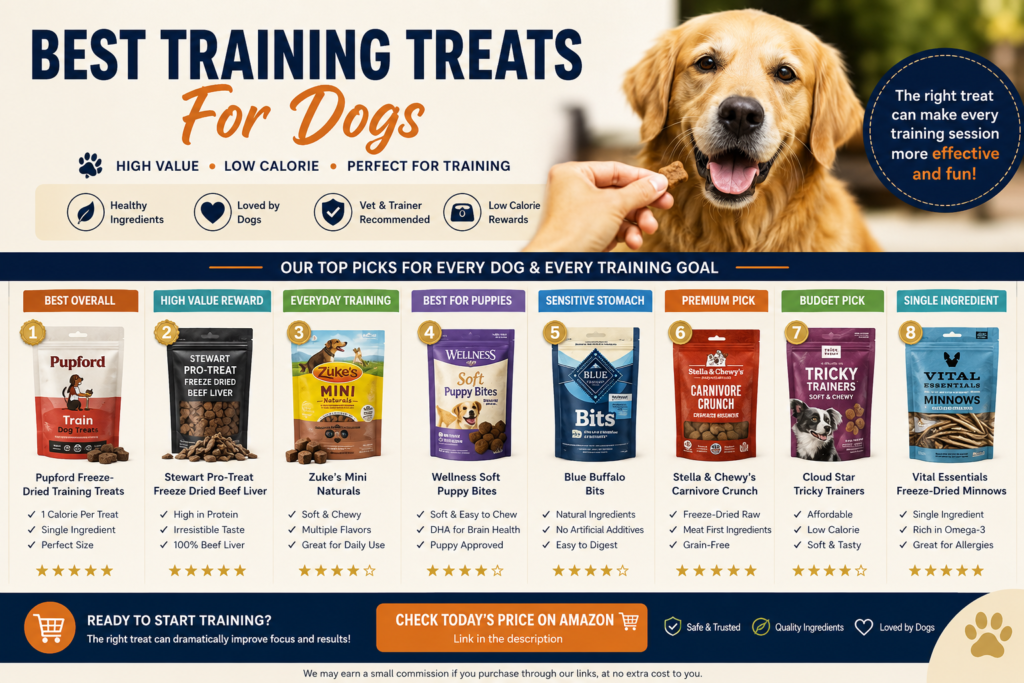
| Product | Best For | Type | Calories | Rating | Amazon |
|---|---|---|---|---|---|
| Pupford Freeze-Dried Training Treats | Overall Best | Freeze-Dried | ~1 kcal | ⭐⭐⭐⭐⭐ | Check Price |
| Stewart Pro-Treat Freeze Dried Beef Liver | High Value Rewards | Freeze-Dried | Low | ⭐⭐⭐⭐⭐ | Check Price |
| Zuke’s Mini Naturals | Everyday Training | Soft Chewy | ~2 kcal | ⭐⭐⭐⭐⭐ | Check Price |
| Wellness Soft Puppy Bites | Puppies | Soft | Low | ⭐⭐⭐⭐☆ | Check Price |
| Blue Buffalo Bits | Sensitive Stomach | Soft | Low | ⭐⭐⭐⭐☆ | Check Price |
| Stella & Chewy’s Carnivore Crunch | Premium Pick | Freeze-Dried | Moderate | ⭐⭐⭐⭐⭐ | Check Price |
| Cloud Star Tricky Trainers | Budget Pick | Soft | ~3 kcal | ⭐⭐⭐⭐☆ | Check Price |
| Vital Essentials Freeze-Dried Minnows | Allergy-Friendly | Single Ingredient | Low | ⭐⭐⭐⭐⭐ | Check Price |
Safety & Vet’s Note
Vet’s Note: Always consult your vet with health questions. No online advice can replace a professional’s guidance, especially for dogs with special conditions. If in doubt, ask your veterinarian before trying a new treat.
Here are key safety points for treats:
- Watch for toxins: Some human foods are toxic to dogs. Never give chocolate, grapes/raisins, onions, garlic, macadamia nuts, or anything with xylitol (artificial sweetener). Even small amounts can cause serious illness. (UC Davis Vet Med specifically warns to avoid those.)
- Raw/Freeze-Dried Precautions: Freeze-dried meats (like liver or chicken) are raw. Cornell Vet and veterinary nutritionists warn these can carry bacteria (Salmonella, E. coli) unless handled like raw meat. Wash hands and surfaces after handling; don’t let children or immunocompromised people handle them. If you feed raw/freeze-dried treats, ensure your dog’s main diet is of high quality to support their gut health.
- Choking Hazards: Always supervise when giving chew treats or raw bones. Even “digestible” chews (like rawhide or bully sticks) can splinter or get lodged if chewed too vigorously. Cut large chews into shorter lengths. Remove any small, hard pieces before they break off.
- Expiration & Storage: Check expiration dates. If a treat smells “off” or has mold, toss it. Store treats according to instructions (some need refrigeration after opening). Especially in hot Texas weather, prevent spoilage by keeping treats cool and dry.
Trainer’s Corner: Pro Tips
Real dog trainers swear by these actionable tips:
- Mark and Reward Quickly: Use a clicker or a marker word like “Yes!” the instant your dog does the right thing, then give the treat. This clear timing helps your dog understand exactly which behavior earned the treat.
- Start Strong: At the beginning of a session or when introducing a new command, use your highest-value treats (the ones your dog loses their mind for). As they get it right repeatedly, you can gradually mix in milder treats or praise.
- Short Sessions: Keep training sessions short and intense. Give a treat every time at first so they stay motivated, then slowly make treats intermittent. This “variable reward” approach is how you build reliable behavior.
- Pair with Praise: Don’t make treats the only reward. Throw in enthusiastic praise, petting, or a quick play break occasionally. Over time, your dog will respond to your voice and touch just as well as treats.
- Use Treats for “Set-Up” Training: Always have treats on hand for impromptu opportunities. For example, if your dog sits quietly by your side, mark the moment and toss a treat. This rewards self-control throughout the day, not just in formal sessions.
- Match Treat to Task: If you’re practicing known commands at home, plain kibble or a vegetable might suffice. If you’re teaching or testing around distractions (park, neighborhood), bring the best-smelling treat you have.
- Be Prepared: Have treats in multiple locations (home, car bag, pocket) so you’re never caught empty-handed. Carry some in a sealable baggie or pouch to stay fresh.
Also Check- Top 10 Vet-Recommended Dog Foods for Large & Small Breeds
Common Mistakes to Avoid
- Overfeeding Treats: A very common error is giving too many treats. It’s easy to go over the 10% calorie limit if you’re not careful. Keep track: you may be doing a dozen repetitions per session, so use very tiny bits.
- Huge or Crumbly Treats: Giving a big cookie (and letting your dog tear off chunks) wastes time and can cause choking. As the AKC points out, even large dogs do better with pea-sized treats. Use soft treats to avoid crumbs.
- Monotony: Using the same treat every single time leads to “treat burnout.” Dogs can get bored and less interested. Always have at least two or three favorites to swap in and out.
- Skipping Health Check: Failing to consider your dog’s health needs (obesity, allergies, diabetes, etc.) can backfire. For example, a diabetic dog should not get sugary treats. Always choose treats appropriate to your dog’s condition, and keep your vet in the loop.
- Ignoring Water Intake: Some salty or jerky treats can make dogs thirsty, especially in summer. Always offer water during and after training sessions to keep your dog hydrated.
- Cheap Treats with “Fillers”: Avoid generic supermarket treats that sound appetizing to humans but have low nutrition. Many of those simply puff up your dog and fill their stomach without providing value.
Decision Checklist
Use this mini-framework when grabbing treats:
- Dog’s Profile: Is your dog a puppy, senior, or adult? Does he have allergies, diabetes, or a sensitive stomach? For seniors or pups, pick softer textures; for dogs with health issues, pick vet-approved options.
- Training Goal: New skill? Use your highest-value treats. Routine practice? Use milder treats or kibble. Long duration or slow behavior? Offer chewy treats sparingly outside formal training.
- Calories & Diet: How many calories can you spare for treats today? Calculate 10% of your dog’s daily needs and stick to it. If you plan a heavy training day, pre-adjust their meals.
- Storage & Portability: Will treats melt or spoil? (Avoid cheese sticks in summer heat.) Pick something stashable in your pocket/pouch without a mess.
- Safety Check: Read the ingredients. Is there anything questionable or allergenic? If in doubt, choose a single-ingredient treat (pure meat or veggies).
- Budget/Frequency: Decide your budget. Premium treats are great but can add up. If you train a lot, consider making your own treats (like dehydrated chicken strips) or buying in bulk. Plan ahead for restocking so you never run out mid-training.
Seasonal & Texas Tips
- Summer Training: Texas heat can be brutal. Train early morning or evening. Keep your dog cool by bringing water and breaking often. Some owners use frozen treats: e.g. stuff a peanut-butter-filled Kong or slow feeder with plain yogurt or broth and freeze it. A cold treat slows your dog down from overexcitement and cools him off.
- Hot Climate Treats: Avoid treats that will melt or spoil, like soft cheese pieces in a pocket. Freeze-dried meat treats are great for travel—they stay solid in heat, plus they’re lightweight. Just be mindful of the raw-food caution above.
- Local Breed Considerations: In Texas, many popular breeds (Labrador Retrievers, German Shepherds, etc.) are very food-motivated. If you have one of these “foodies,” strict portion control and vigilant training are essential. On the other hand, if you have a more stubborn breed, you might need extra-special treats (like diced hot dog or bacon) to get attention.
- Outdoor Environment: Texas has lots of space—fields, parks, hiking trails. Use these to your advantage, but always have high-value treats handy outdoors. The AKC notes that in distracting settings you should “pull out the stinky treats” your dog adores.
- Festivals & BBQ Season: Remember during Texas holidays, keep people food away from dogs. If you grill meat, save a plain piece (no seasoning) as a special treat later. Human food often has harmful spices and fats for dogs.
Cost Considerations
Training treats range from budget to premium. Here’s what to expect:
- Premium Natural Treats: Freeze-dried or gourmet treats (e.g., pure liver bites, organic jerky) can be pricey—think $15–$30 for a small bag (just a few ounces). Because you use them sparingly (tiny pieces), one bag lasts a long time. These are great for high-value rewards.
- Mid-Range Options: Training biscuit packs or dehydrated meats run around $5–$15. They often have balanced nutrition or added vitamins.
- Low-Cost/DIY: You can make training treats by baking small pieces of cooked chicken or fish at home. Vegetables like carrot slices cost pennies. Plain kibble (even your dog’s own food) can be a zero-cost treat. Homemade peanut-banana-oat treats are also easy, though measure carefully to keep them healthy.
- Expect Variance: Watch the price per ounce and per treat. A large bully stick might cost $3 but is one treat; a bag of tiny biscuits might be $10 but has hundreds of treats. Always calculate cost per training session.
- Value vs. Frequency: If you train multiple times a day, cheaper treats may make sense. If you only need the very best treats occasionally, splurge on premium samples. It’s often worth spending a bit more on treats you know your dog won’t ignore.
Key Takeaways
- High-Value & Bite-Sized: Use small, tasty, protein-based treats for training.
- Limit Calories: Keep treats ≤10% of daily diet. Choose low-cal options if needed.
- Rotate & Mix Rewards: Vary treat types to prevent boredom. Also use praise and play to reward good behavior.
- Follow Vet Advice: Check ingredients and avoid toxins. Handle raw treats safely and consult your veterinarian for dietary concerns.
- Context Matters: Match treat type to the situation – saving your dog’s favorite treat for the hardest tasks and using simpler treats for routine reinforcement.
FAQ
Q: What are considered high-value dog training treats?
A: High-value treats are those your dog loves most – usually small meat or cheese rewards with a strong aroma. Examples include freeze-dried liver bites, bitesize jerky, or small bits of cheese or hot dog. They should be so delicious your dog stops everything to eat them. Vets recommend using high-value treats when teaching new cues or in distracting environments.
Q: How many treats can I give my dog for training per day?
A: Most experts say treats should make up no more than 10% of your dog’s daily calories. For example, if your dog needs 400 kcal/day, only about 40 kcal should come from treats. Count calories: even one large biscuit can be ~80 kcal. On heavy training days, shorten meal portions accordingly so total intake stays balanced.
Q: What are some healthy, low-calorie training treats?
A: Fresh fruits and vegetables are great low-calorie choices. Bite-size carrot pieces, green beans, or apple chunks (no core/seeds) can work as treats. They typically contain <5 kcal per piece. Lean meats or cottage cheese (in moderation) are also nutritious. Always introduce any new treat slowly and check with your vet if your dog has a health condition.
Q: Can I train my dog without treats?
A: Yes – many trainers use rewards like toys, praise, or pets. However, treats can jump-start learning by capturing your dog’s focus, especially early on. If you want to phase out treats later, begin by rewarding with toys or affection in place of every few treats. For most dogs, a mix of food and play as rewards is ideal in the long run.
Q: Are freeze-dried or raw treats safe for training?
A: Freeze-dried meat treats are very effective (dogs love the taste) and convenient for training, but they are raw. Veterinary experts caution that raw treats can carry Salmonella or other bacteria. Handle them like raw meat: wash hands after handling, keep surfaces clean, and store properly. If you have a very young, old, or immunocompromised family member, consult your vet first. Always buy treats from reputable manufacturers with quality controls.