
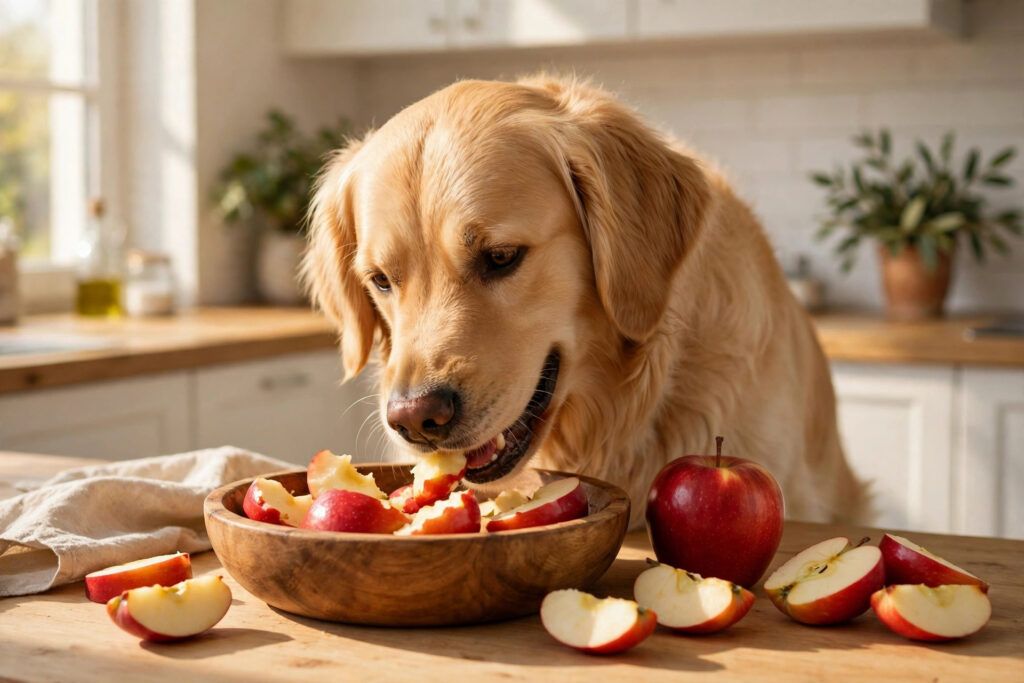
Yes — dogs can eat apples, as long as you take the core and seeds out first.
That’s the whole rule, really — and it’s the short answer to can dogs eat apples, every time someone asks it. The crunchy flesh your dog is staring at while you slice one for yourself? Totally fine. The hard middle bit with the seeds tucked inside? That stays in your hand, not in their bowl.
So many owners ask: can dogs eat apples at all? Most dogs go a little wild for apple slices, and honestly, it’s one of the better things they could beg for. It’s low in calories, it crunches, and it doesn’t come out of a bag full of stuff you can’t pronounce. But “can dogs eat apples” has a second half that matters just as much as the yes — how much, which parts, and which apple-flavored things at the holiday table are a hard no.
Key takeaways
- Yes, apple flesh is safe for dogs — washed, cored, and cut into bite-size pieces.
- Never feed the core, seeds, or stem. Seeds contain amygdalin, a compound that releases cyanide when digested, and the core itself is a choking and blockage risk.
- Keep apple treats under 10% of your dog’s daily calories — for most dogs that’s a few slices, 2–3 times a week, not a whole apple a day.
- A medium apple has about 95 calories, and 100 grams of apple flesh has just 52 calories and 2.4 grams of fiber.
- Skip apple pie, sweetened applesauce, cider, and anything with xylitol or nutmeg — those are the real holiday traps.
Are apples safe for dogs?
Yes, and vets are pretty consistent on this one when asked can dogs eat apples. The American Kennel Club lists apples as a safe fruit for dogs, calling out vitamin C, vitamin A, potassium, and antioxidants, plus fiber that helps with digestion. It’s a treat, not a health plan — your dog already gets what they need from their regular food — but as treats go, an apple slice beats most of what’s in the treat jar.
If you’re wondering can dogs eat apples and still get something useful from them, here’s what a slice actually gives them: fiber for steadier digestion, vitamin C and vitamin A, potassium, and a good amount of water, so it’s hydrating on a warm day. At 52 calories per 100 grams, it’s also one of the lighter treats you can hand over, which is handy if your dog is already carrying a few extra pounds. The crunch helps a little with teeth too — not a replacement for brushing, just a small bonus.
One thing worth saying plainly: dogs make their own vitamin C, so nobody needs to feed apples for that. Feed them because they’re a clean, low-calorie snack your dog actually enjoys. That’s reason enough.
What’s actually dangerous about apples?
When people ask can dogs eat apples safely, the answer comes with three things to avoid — only three, and they’re all avoidable.
The seeds. Apple seeds contain amygdalin, which turns into cyanide during digestion. That sounds terrifying, and it is the reason every guide says to remove them — but keep the scale in mind. A dog would need to chew and swallow a lot of seeds for a real poisoning risk, because whole, unchewed seeds often pass straight through. Still, there’s no reason to test it. Core the apple, toss the seeds, done.
The core and stem. This is the more likely problem, especially for small dogs. A hard core can lodge in the throat or, if swallowed in pieces, block the gut. If your dog is a gulper — the kind who inhales food without chewing — this is the risk to take seriously.
Too much apple. Apples are sweet. A whole apple every day, or a big bowl of slices, can mean loose stools, gassy misery, and extra sugar your dog doesn’t need. Dogs with diabetes, dogs carrying extra weight, and fast-growing puppies are the ones to watch here — go slow with them, and check with your vet first if your dog has a medical condition.
Now the panic question every owner asks: what if my dog already ate some seeds? If they swallowed a few whole seeds, don’t panic — whole seeds usually pass without releasing much of anything, because the amygdalin only releases when the seed is chewed and broken down. Watch for vomiting, diarrhea, drooling, or unusual tiredness, and call your vet if anything looks off. The numbers for real danger are in the emergency section below.
How much apple can my dog have?
Can dogs eat apples in big amounts? No — the vet rule for all treats applies here: treats, apples included, should stay under 10% of your dog’s daily calories. In slices, that works out like this:
| Dog size | Example breeds | Per serving | How often |
|---|---|---|---|
| Small (under 10 lbs) | Chihuahua, Yorkie | 1–2 small slices | 2–3 times a week |
| Medium (10–25 lbs) | Beagle, Cocker Spaniel | 2–4 slices, about a quarter apple | 2–3 times a week |
| Large (25–60 lbs) | Border Collie, Labrador | Up to half an apple | 2–3 times a week |
| Extra-large (60+ lbs) | Great Dane, Mastiff | Up to a whole apple, in pieces | 2–3 times a week |
First time? Give one small piece and wait a day. If their stomach stays calm, you’re good to go with the portion above. Puppies can have a tiny taste once they’re eating solid food, but keep it to a single small piece — their stomachs are still learning the world, and sugar hits them harder.
How do I serve apples to my dog?
Wash it, core it, cut it up. That’s the prep, every time you answer can dogs eat apples with a yes in your own kitchen. Wash off pesticide residue, cut around the core so no seeds sneak in, and slice the flesh into pieces small enough that your dog can’t choke on them — pea-size for a Chihuahua, thumb-size for a Lab.
Then make it fun:
- Plain slices. The classic. Most dogs don’t need anything fancier.
- Frozen slices. Freeze slices on a tray for a crunchy summer treat that lasts longer than two seconds.
- Apple topper. Dice a few pieces over their regular kibble for a dog who has decided dinner is boring.
- Lick-mat smear. Mash a little plain, unsweetened applesauce onto a lick mat for a slow, calming snack.
- Stuffed toy filling. Tuck small apple pieces into a Kong with a spoonful of peanut butter — check the peanut butter label for xylitol first, always.
- Training treats. If you’re working on recall or new tricks, small apple cubes are a low-calorie reward you can use again and again — which is exactly why they pair so well with the treat ideas in our guide to the best training treats for dogs.
Can dogs eat apples with the peel on? Leave the peel on if your dog handles it fine — that’s where a lot of the fiber lives. If their stomach is sensitive, peel it. Either way is safe.
What about applesauce, green apples, and dried apples?
Applesauce: can dogs eat apples in sauce form? Plain and unsweetened, yes, in small amounts. The moment it has added sugar, it’s a no, and if it contains xylitol (also listed as birch sugar), it’s dangerous — xylitol can be fatal to dogs even in small amounts. Read the label every time, even on a brand you’ve bought before.
Green vs. red apples: can dogs eat apples of either color? Yes, both are fine. Green apples like Granny Smith are a touch tarter and slightly lower in sugar, red ones like Gala and Fuji are sweeter. Pick whichever your dog likes — the safety rules don’t change.
Dried apple slices and apple chips: can dogs eat apples dried? Fine only if they’re plain, with no added sugar, sweetener, or preservative. Most store-bought dried fruit is sweetened, so check the ingredients. And because drying concentrates the sugar, keep the portion even smaller than fresh slices.
Apple pie, apple butter, and cider: can dogs eat apples baked into pie or pressed into cider? Skip them all. Pie filling is loaded with sugar and often nutmeg, which is toxic to dogs in more than trace amounts. Apple butter is concentrated sugar. Fresh cider is sugary too, and hard cider contains alcohol, which is never safe for dogs. This is the trap at Thanksgiving and Christmas — a slice of pie slipped under the table feels generous, but it’s one of the worst apple things you can share. Our Thanksgiving foods guide and Christmas foods guide both flag the same table traps, and apple pie is right there on the list.
What if my dog already ate the core or seeds?
First, breathe. Then check what actually happened — because can dogs eat apples and survive a stolen core is a question with a calm answer most of the time.
Can dogs eat apples seeds by accident and be fine? If your dog ate a few whole seeds, they’ll most likely pass them without any trouble. Watch them for the next day or two for vomiting, diarrhea, drooling, wobbly walking, or unusual sleepiness. If you see any of those, or if your dog chewed and swallowed a large number of seeds — say, the seeds from several whole apples — call your vet right away.
If your dog swallowed a whole core, watch for the signs of a blockage: vomiting, straining to poop, belly pain, or refusing food. Small dogs are at higher risk here, and a blockage is a vet visit, not a wait-and-see.
If you’re ever unsure, call. The ASPCA Animal Poison Control Center is at (888) 426-4435, and the Pet Poison Helpline is at (855) 764-7661. Both are worth saving in your phone before you need them.
Can dogs eat apples — questions owners actually ask
Can dogs eat apple skin?
Yes. Washed apple skin is safe and adds fiber. Peel it only if your dog has a sensitive stomach or the peel seems to upset them.
Can dogs eat apple seeds?
No. Always remove the core and seeds before serving. A few accidentally swallowed whole seeds are unlikely to poison a dog, but there’s no reason to feed seeds on purpose.
Can puppies eat apples?
Yes, in tiny amounts once they’re on solid food. One small piece to start, and watch their stomach for a day before giving more.
Are apples good for overweight dogs?
Can dogs eat apples when they’re on a diet? They’re one of the better treats for a dog watching their weight — low calorie, high fiber, and filling. Just keep portions inside the table above and count them in the daily treat budget.
Can dogs eat apples every day?
They can have a small amount daily if it stays under 10% of their calories, but 2–3 times a week is a safer rhythm for most dogs. Treats should stay treats.
So, are apples OK for dogs?
Yes — can dogs eat apples? Flesh yes, core and seeds never, slices not whole apples. Wash it, core it, cut it small, keep it to a few slices a couple of times a week, and skip the pie. That’s the entire playbook, and it’s one of the easiest wins in your kitchen: a treat your dog loves, that you already have in the fruit bowl, with nothing to buy and nothing complicated to remember.