
The 3-3-3 Rule for Rescue Dogs (And How It Actually Went for Us)
I adopted my Pitbull last year and I genuinely thought I had this figured out. I already had a Golden and a Doodle at home — I’ve done the puppy thing, the adjustment period thing, I know how this works. Then we walked in the front door and he just… stopped being a dog. Wouldn’t eat. Found the smallest possible corner of the house and folded himself into it. Flinched every single time I walked past.
I remember standing in my kitchen that first night thinking, okay, I’ve made a huge mistake. This dog hates it here. This isn’t going to work.
A friend at the shelter talked me down and mentioned the 3-3-3 rule, and honestly it was the first thing that made me feel like I wasn’t failing at this.
If you’re a few days into a new rescue dog and you’re spiraling a little — I get it, I was right there. Your dog isn’t broken and you haven’t messed anything up. They’re just going through something huge. Here’s the rule, and here’s what it actually looked like in my house, mess and all.
So, What Is The 3-3-3 Rule for Rescue Dogs, Actually?
It’s not some scientific formula, just a rough pattern a lot of rescue dogs follow:
3 days — pure overwhelm. They don’t know you, don’t know the house, don’t know if any of this is safe.
3 weeks — they start figuring out the rhythm of your house, and you start seeing who they really are.
3 months — they finally exhale. Like, actually relax.
Rough guide, not a deadline. Every dog’s on their own clock.
Day One Through Three: The Shutdown
Try to picture getting dropped somewhere with zero context — you don’t speak the language, don’t know the rules, don’t know if the people around you are safe or not. That’s roughly the headspace your dog is in.
Their stress hormones are maxed out those first few days. You’ll probably see some combination of:
- Hiding — under the bed, behind furniture, in the crate with the door open
- Not eating, sometimes not drinking either
- Pacing, panting, that low whine
- Accidents, even from a dog who’s normally perfectly house-trained
For us, my Pitbull picked a spot behind the couch and basically lived there for three days. I’d walk by and see just… his back end sticking out from behind it. Didn’t touch his food bowl for almost two full days, which terrified me, honestly.
Here’s the thing I wish someone had told me sooner: don’t try to fix it by loving on them harder. No visitors, no “let’s introduce him to everyone!” No forcing cuddles because you’re anxious and want reassurance that he likes you. Quiet house. Food left nearby, not shoved in his face. Let him come to you on his own time, even if that takes way longer than you want it to.
Week One Through Three: The Real Dog Shows Up
Somewhere around week two or three, the fog starts lifting. They start clocking your routine — oh, breakfast happens after this person gets up, walks happen around this time, this is the couch I’m apparently allowed on now.
And their actual personality comes out. All of it. The good parts and the parts you didn’t sign up for.
This is honestly the phase nobody warns you about enough. Everyone talks about day one being hard, but for us? Week three wrecked me more. Because that’s when it clicked for my Pitbull that he wasn’t going back anywhere — he was staying — and that’s exactly when the separation anxiety showed up. Full force. I’d pick up my car keys just to grab something from my car and he’d start pacing and panting like the world was ending.
This is the part where giving them an actual space of their own — one that’s really, genuinely theirs — starts to matter a lot. I put together a whole guide on how I figured this out if you’re in the thick of it right now: 👉 [The S.N.B. Formula: How to Choose the Perfect Dog Bed for Anxiety]
Month Two, Month Three: The Good Part
This is the part that makes the hard weeks worth it. Somewhere around the two-to-three-month mark, something shifts. They stop bracing for something bad to happen.
You’ll start noticing it in small ways — sleeping with their belly up, ears relaxed instead of pinned back, actually seeking you out instead of just tolerating you being near them.
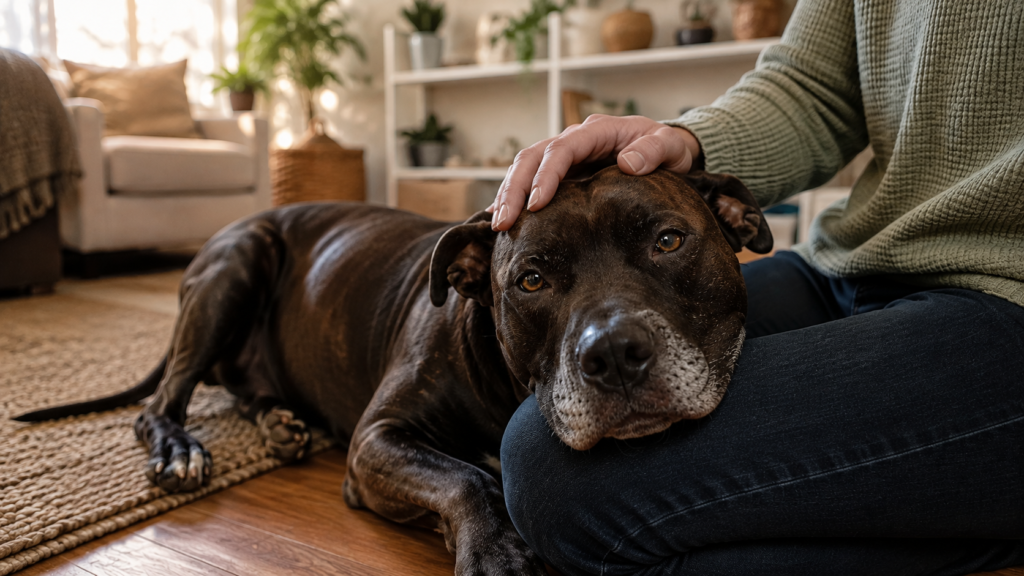
I remember the exact moment for us. I was sitting on my living room floor, doing something completely unrelated — I think I was untangling a leash, honestly nothing significant — and my Pitbull just walked over, let out this huge dramatic sigh, and dropped his whole head onto my lap like it was the most natural thing in the world. That was it. He was home. Not “staying here” home. Actually home.
Keep doing what you’re doing. Routines, patience, showing up the same way every day even when it feels like nothing’s changing. It’s changing.
Also Check: Why Dogs Lick Their Paws (And What Actually Helps)
The S.N.B. Formula: How to Pick the Right Anxiety Bed
Frequently Asked Questions
It’s been three weeks and my dog just growled at my other dog. Did I mess up the introduction?
Probably not. This one comes up a lot and I always say the same thing — the 3-3-3 rule is a rough shape, not a deadline. My Pitbull took closer to six weeks before he was actually relaxed around my Doodle, not three. And honestly, growling around week three can be a good sign in a weird way — it means your dog feels safe enough to actually say “hey, back off” instead of just shutting down.
Slow the intros back down, keep them separated when you can’t watch them, and whatever you do, don’t punish the growl. It’s your dog’s way of warning you before things escalate — take that away and some dogs skip straight to a bite next time. (If it keeps happening or you’re seeing real tension, it’s genuinely worth getting a trainer’s eyes on it in person.)
My dog was an angel for the first few days and now he’s eating my shoes. What happened?
Nothing’s wrong — you just met the honeymoon phase leaving. Those first few days, a lot of dogs are so shut down and exhausted they seem unnaturally well-behaved. Once their energy comes back around week three, so does everything else — the chewing, the counter-surfing, all of it. It’s not regression, it’s just… them, finally. KONGs, more exercise, consistency. It gets better.
Does this apply to puppies too, or just adult rescues?
Puppies usually move through it faster since they’re not carrying years of baggage with them. They’ll still need a few days to adjust after leaving their litter, but you’re usually not looking at the same kind of deep shutdown you see with an adult dog who’s been through multiple homes or a shelter stay.
It’s been almost a month and my dog still won’t come out of his shell. Is that normal?
A little slower than average, sure — every dog’s different. But if it’s been closer to a month with genuinely zero change, or things feel like they’re getting worse instead of better, I’d stop waiting it out and talk to your vet or a trainer. Sometimes there’s something else going on underneath, and it’s worth ruling that out rather than assuming it’s “just” decompression forever.