
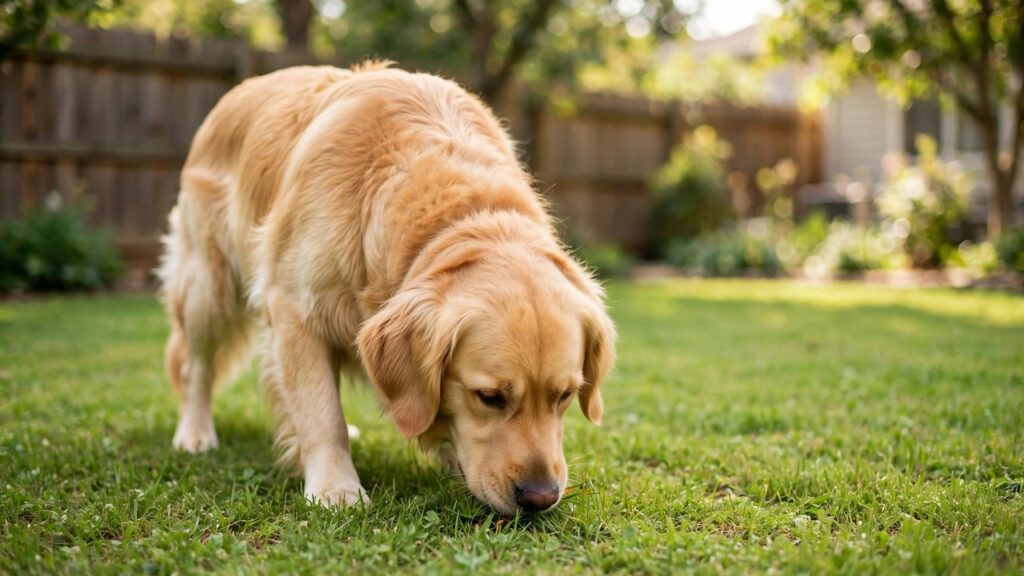
No. In most cases, your dog is not sick. He just likes grass.
That is the short answer, and it holds up against the best research we have. In 2008, researchers at UC Davis (Sueda, Hart and Cliff) surveyed 1,571 owners of plant-eating dogs and published the results in Applied Animal Behaviour Science. Grass eating turned out to be one of the most ordinary things a dog does. About 68 percent of those dogs ate plants daily or weekly, and grass was the plant they picked most often. Only 8 percent looked ill before eating grass, and only 22 percent vomited afterward. Younger dogs grazed the most. The type of diet, commercial, raw or home-cooked, made no difference at all.
So if your dog stops on a walk to pull at a few blades, that is normal dog behaviour, not a cry for help. The question is why do dogs eat grass in the first place, and when the habit means something is wrong. The rest of this article is about the cases where it is not normal, and how to tell the two apart.
Key takeaways
- 68 percent of dogs in the largest survey ate plants daily or weekly, and grass was the plant they ate most.
- Only 8 percent looked ill before eating grass, and only 22 percent vomited afterward.
- The vomit theory is mostly a myth. In one controlled count, researchers saw 5 vomiting events across 709 grass-eating episodes.
- The real risks are not the grass itself. They are pesticides, parasites, and grass awns.
- Frantic gulping is different from calm grazing. Track it for 7 days before you worry.
Why do dogs eat grass?
The short answer to why do dogs eat grass is that several reasons are likely at once, and the mix changes from dog to dog.
Instinct comes first. Wild canids eat plants, and domestic dogs kept the habit. Studies of wolf droppings have found grass in 11 to 47 percent of samples. Your dog is not broken for doing something his ancestors did. He is doing what dogs do.
Taste and texture come next. Some dogs simply enjoy it, especially fresh spring grass. Puppies are the worst offenders here, because puppies explore the world with their mouths, and grass is everywhere. The UC Davis survey found younger dogs grazed more than older ones, which fits.
Fibre is the reason owners hear most often, and it has a grain of truth. Grass is roughage, and some dogs seem to reach for it after a rich meal or when their stomach feels off. But do not turn that into a diagnosis. The UC Davis team found no link between diet type and grass eating, and no study has shown that grass eating proves a dog is missing a nutrient. If you think your dog needs more fibre, that is a question for your vet, not a reason to let him fill up on the lawn.
Boredom is the one owners can actually fix. Grazing goes up when dogs spend long stretches alone with nothing to do. A dog who has been in the yard all afternoon with no walk and no toy will find his own entertainment, and grass is right there. It is the same restless energy that drives digging, which is why a bored dog often does both.
Anxiety and attention round out the list. Some dogs graze when they are nervous, the way some people bite their nails. Others learn that eating grass gets a reaction. If you gasp and run over every time he takes a bite, he has learned a reliable way to get your attention.
Do dogs eat grass to make themselves throw up?
Mostly, no. This is the story everyone has heard about why do dogs eat grass, and the numbers do not back it.
In the UC Davis survey of 1,571 dogs, only 22 percent regularly vomited after eating plants. That means more than three out of four grass-eating dogs kept it down. And when researchers watched grass eating closely, they counted just 5 vomiting events across 709 grass-eating episodes. Vomiting looks like a side effect of the grass, not the purpose of eating it.
The detail that flips the story is this: the dogs that looked ill before eating grass were the ones more likely to vomit afterward. The upset stomach came first. The grass came second. A dog who already feels sick may graze and then throw up, and the grass gets blamed for both.
If your dog looks fine, takes a few bites, and throws up once, that is usually the grass irritating his stomach on the way back up. It is unpleasant, but it is not a treatment plan he chose. If it keeps happening, or he looked sick before he started, that is the pattern to watch.
Is my dog’s grass eating normal, or should I worry?
Most grass eating is calm grazing. The question of why do dogs eat grass matters less than how your dog eats it. The problem version looks different, and you can tell them apart in about ten seconds.
| Casual grazing | Frantic eating |
|---|---|
| A few bites, then moves on | Gulps fast, head down, hard to distract |
| Relaxed body, normal tail | Restless, whining, licking lips |
| After a walk, in a sunny spot | Late at night, on an empty stomach, waking you at 3 a.m. |
| Fine afterward, eats dinner normally | Vomits yellow bile, skips food, seems flat |
| Let him be | Track it for 7 days, and call the vet if it repeats |
Calm grazing on a clean lawn needs no fix. Frantic eating, especially at night or on an empty stomach, is worth a closer look. Dogs who wake up to eat grass and then throw up yellow bile are often dealing with an empty stomach overnight, and that is something your vet can help with, sometimes as simply as a small late-night snack. Ask your vet before you change his feeding routine.
When should you worry about grass eating?
Call the vet now if you see any of these: repeated vomiting, blood in vomit or stool, a swollen hard belly, he cannot keep water down, collapse or extreme tiredness, or he ate grass from a treated lawn and is now drooling or shaking. Those are not wait-and-see signs.
Mention it at the next visit if the grazing started suddenly in an older dog, if he grazes every day and skips meals, if he is losing weight, or if diarrhoea keeps coming back. A sudden change in an old habit is always worth a mention, even when the dog looks fine otherwise.
One more pattern to note: grass eating that comes with a lot of licking at the air, swallowing hard, or eating non-food things like socks and stones. That can point to stomach trouble or a condition called pica, and it needs a vet, not a home fix.
What are the real dangers in the grass?
The grass itself is rarely the problem. What is on it, or in it, is.
Pesticides, herbicides, and fertilisers top the list. A treated lawn can poison a dog, and the risk is highest right after spraying. Keep your dog off any lawn that has just been treated, and ask your neighbours or your lawn service when they last sprayed. If you think your dog swallowed pesticide, take him to a veterinary emergency hospital right away. You can also call ASPCA Animal Poison Control at (888) 426-4435 or the Pet Poison Helpline at (855) 764-7661.
Parasites are second. Hookworms and roundworms live in soil and grass where other dogs have been, and a grazing dog can pick them up. This is the same reason regular parasite prevention matters, and why a faecal test at the vet is a routine check, not a big deal. If your dog grazes in parks where many dogs go, keep his prevention up to date.
Grass awns are the risk most owners never hear about. These are the sharp, bristly seed heads on some grasses. They can work their way into ears, paws, and skin and cause painful infections. After walks through long grass, check between his toes and inside his ears. A dog who keeps shaking his head or licking one paw after a walk in tall grass may have an awn stuck somewhere.
Long blades swallowed whole can also, rarely, cause a blockage in the stomach. It is uncommon, but it is one more reason to keep grazing to short grass and short sessions.
What can you do at home?
Start with the easy wins. Walk him more, and make the walks interesting. A dog who has sniffed, run, and played for a good stretch grazes less than a dog who has been staring at a fence all day. Food puzzles and chew toys help too, because a busy mouth is a mouth that is not eating the lawn.
Check the fibre question with your vet before you add anything to his bowl. Pumpkin is one fibre food vets often mention, and our guide to feeding pumpkin covers the amounts by dog size, but ask your vet first, and never swap meals for grass.
Then run a simple 7-day tracking plan. If you are still wondering why do dogs eat grass, these notes are your best next step. It takes one minute a day, and it turns a vague worry into something a vet can actually use. Each day, write down four things: the time he grazed, how much (a few bites, or frantic gulping), how he seemed before (calm, restless, hungry), and what happened after (fine, vomited, skipped dinner). At day seven, look for a pattern. Same time every day? Always on an empty stomach? Always after being left alone? If there is a pattern, take the notes to the vet. If there is no pattern and he is fine, you have your answer, and you can stop worrying.
FAQ
Can I let my dog eat grass?
Yes, if the grass is untreated and he is calm about it. A few bites on a clean lawn is normal. Keep him off sprayed lawns and long grass full of seed heads, and steer him away if he starts gulping.
How do I stop my dog from eating grass?
Most of the time you do not need to. If you want less of it, walk him more, give him something to chew, and call him away with a treat when he starts. Never punish it. Punishment adds stress, and stress can make grazing worse.
Is eating grass a sign of worms?
Not by itself. Worms can come from grass other dogs have fouled, but grass eating alone does not mean your dog has worms. Look for weight loss, a dull coat, or worms in the stool, and ask your vet about a faecal test.
Do puppies eat grass more than adult dogs?
Yes. Younger dogs graze more, the UC Davis survey found. Puppies explore with their mouths, and most grow out of the worst of it. The same rules apply: clean grass only, and watch for frantic gulping.
Why do dogs eat grass every day?
Some dogs graze every day and it is still normal. Daily grazing on clean grass, with a normal appetite and normal stools, is just a habit. It only becomes a vet question when it turns frantic, or comes with vomiting, skipped meals, or weight loss.
So, should you let your dog eat grass?
Most of the time, yes. A calm dog nibbling clean grass is doing something dogs have done for thousands of years. Watch the pattern, keep the lawn safe, and call the vet when the pattern changes. That is the whole job.