
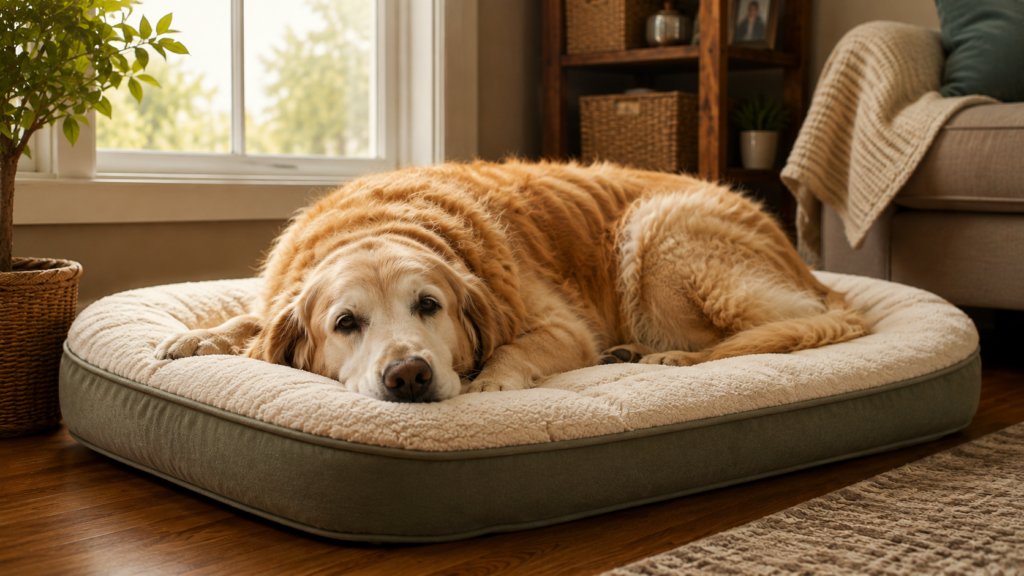
Your senior dog sleeps up to 18 hours a day — and the bed they sleep on shapes every one of those hours. Knowing the signs senior dog needs new bed replacement can mean the difference between stiff, restless nights and deep, restorative rest for your aging companion.
Dogs are considered seniors around age 7 (earlier for large breeds), and their bodies change: joints stiffen, muscles weaken, and pressure points ache more. A bed that worked at age 3 often fails them at age 10. Here are the seven clearest signs it’s time for an upgrade — and what to look for in a replacement.
Why the Right Bed Matters More for Senior Dogs
Young dogs can sleep on almost anything and bounce up fresh. Senior dogs can’t. As cartilage wears thin and arthritis sets in, hard or unsupportive surfaces press directly on sore joints, creating pressure points that worsen pain and stiffness. Quality sleep is when the body repairs tissue — and seniors need that repair more than ever.
An orthopedic bed with proper support distributes your dog’s weight evenly, cushions aching joints, and makes it easier to stand up after resting. For a senior dog, the right bed isn’t a luxury — it’s joint care.
7 Signs Your Senior Dog Needs a New Bed
1. They Struggle to Get Up
Watch your dog rise after a nap. If they hesitate, rock back and forth, or need several attempts to stand, the bed may be working against them. Soft, unsupportive beds let heavy joints sink too deep, forcing stiff legs to push up from an awkward position. A firm orthopedic base gives them a stable platform to push against — many owners notice easier mornings within days of switching.
2. The Bed Looks Flat and Lumpy
Press your hand into the center of the bed. If you feel the floor through it, or the filling has migrated into lumps, the support is gone. Most polyester-fill beds flatten within a year of nightly use by a medium or large dog. Memory foam holds up far longer, but even foam breaks down eventually. A bed that no longer springs back isn’t cushioning anything.
3. They’re Restless at Night
A senior dog that circles, repositions constantly, sighs, or gets up and lies back down repeatedly is telling you they can’t get comfortable. While some restlessness is normal with age, a sudden increase often points to the bed. Pain from pressure points makes dogs shift to find relief — and a worn-out bed creates more pressure points, not fewer. If your senior also seems anxious at night, a calming dog bed for anxiety with raised bolsters can add a sense of security alongside support.
4. They Avoid the Bed Entirely
When a dog chooses the hard kitchen floor over their plush bed, pay attention. Counterintuitively, some seniors prefer hard surfaces because sinking into a too-soft bed hurts their joints when they try to stand. Others avoid a bed that’s become lumpy or smells off. Either way, bed avoidance is a vote of no confidence — and a clear signal to replace it with something genuinely supportive.
5. You Notice New Stiffness or Limping
Morning stiffness that eases as the day goes on is classic arthritis — and a bad bed makes it worse. Overnight, joints cool and stiffen; a supportive orthopedic surface minimizes the pressure that aggravates them. If your senior is limping more after long rests, the bed is a prime suspect. This is also the moment to talk to your vet: new or worsening lameness deserves a professional evaluation, not just a new bed.
6. They’re Sleeping More but Resting Less
Senior dogs naturally sleep more, but the sleep should be deep and peaceful. If your dog naps constantly yet still seems tired, groggy, or irritable, they may not be reaching restorative sleep stages. Discomfort from an unsupportive bed causes micro-wakeups that fragment sleep. Better support often means visibly deeper, calmer rest.
7. The Bed Smells Despite Washing
Senior dogs can develop incontinence, drool more, or produce stronger body odor. If the bed retains smell even after washing — or the waterproof liner has cracked — it’s a hygiene problem. Bacteria in old bedding can irritate skin, and damp foam loses support fast. A fresh bed with a washable, waterproof cover solves both comfort and cleanliness at once.
What to Look for in a New Senior Dog Bed
When you shop for a replacement, prioritize these features:
- True orthopedic memory foam: At least 3–4 inches of high-density foam that supports weight without bottoming out. This is the single most important feature.
- Bolsters or raised edges: Many seniors like resting their head elevated — it eases breathing and neck strain.
- Washable, waterproof cover: Non-negotiable for seniors. Look for removable covers and a waterproof liner underneath.
- Right size: Your dog should stretch fully without hanging off the edge. When in doubt, size up.
- Low entry: Avoid beds with high walls all around — stiff seniors need to walk in, not climb.
For a detailed breakdown of top options, see our guide to the best dog bed for senior dogs with arthritis, which covers orthopedic picks designed specifically for aching joints.
Frequently Asked Questions
How often should I replace my senior dog’s bed?
Every 1–2 years for foam beds, and yearly for basic polyester-fill beds — sooner if you notice flattening, odor, or any of the seven signs above. Senior dogs wear beds out faster because they spend more hours on them.
Is memory foam really better for older dogs?
Yes. Memory foam distributes weight evenly and eliminates the pressure points that aggravate arthritis. Standard polyester fill compresses under a dog’s weight and offers little joint support by comparison.
My senior dog prefers the cold floor. Should I still buy a bed?
Some seniors like cool surfaces, especially in warm climates. Look for an orthopedic bed with a cooling gel layer or breathable cover — it gives joint support without the heat buildup of traditional foam. Place it where they already like to rest.
Can a new bed really help with arthritis?
A bed can’t cure arthritis, but proper support genuinely reduces pain and stiffness. Many owners report easier mornings and deeper sleep after switching to orthopedic foam. Pair the bed upgrade with vet-guided arthritis management for the best results.
What size bed does my senior dog need?
Measure your dog nose-to-tail while they’re stretched out sleeping, then add 6–8 inches. Senior dogs often sprawl to relieve joint pressure, so err on the larger side — a cramped bed forces curled positions that stiffen joints.
Veterinary note: if your senior dog shows sudden mobility changes, new limping, yelping when touched, or loss of appetite, consult your veterinarian promptly. These can signal arthritis flare-ups, injuries, or other conditions that need professional diagnosis — a new bed helps comfort, but it doesn’t replace veterinary care.
The Bottom Line
Your senior dog can’t tell you their bed hurts — but their behavior does. Struggling to stand, avoiding the bed, restless nights, and flattened padding are all clear signals. Don’t wait for the bed to fall apart completely; by the time it’s visibly destroyed, your dog has likely been uncomfortable for months.
A quality orthopedic bed is one of the simplest, most impactful upgrades you can make for an aging dog. Pair it with regular vet checkups, gentle daily movement, and a comfortable routine — and you’ll give your senior the deep, pain-free rest they’ve earned after a lifetime of loyalty.