
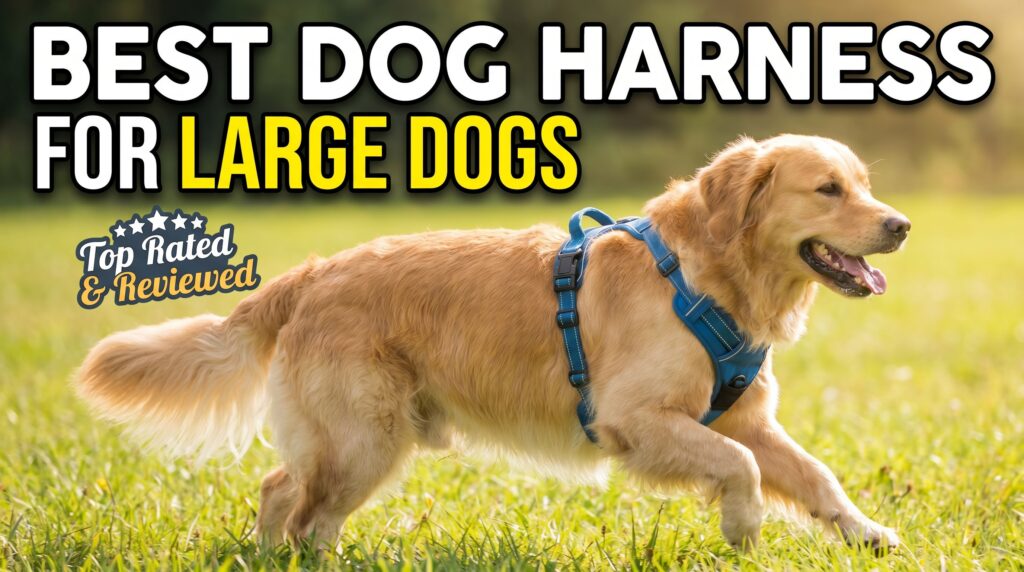
You searched for the best dog harness for large dogs because you’ve already been through the bad ones. The buckle that snapped. The vest your Lab wiggled out of in ten seconds flat. The front-clip harness that twisted sideways every single walk.
I get it. I’ve been training large-breed dogs in Texas for over 12 years — Rottweilers, Great Danes, Mastiffs, and Malinois. I’ve seen owners quit walking their dogs entirely because their gear kept letting them down.
My 85-pound Cane Corso mix, Diesel, lunged at a squirrel one afternoon and snapped the chest strap of a cheap harness clean off. He was loose near traffic for 20 terrifying seconds. That was the last budget harness I ever bought.
The good news? A handful of harnesses are actually built for dogs like yours. I’ve personally tested every one on this list. Let’s cut straight to what works.
What Actually Makes a Great Large Dog Harness?
Most harness reviews just list specs. Here’s what I actually look for when a 100-pound dog is on the other end:
1. Hardware That Doesn’t Quit Skip plastic buckles entirely. Look for aluminum or steel hardware, reinforced stitching, and load-rated attachment points. If the product specs don’t mention hardware material, assume it’s cheap plastic.
2. True Escape-Proof Design Large dogs with narrower waists — Greyhounds, Huskies, even some Labs — can back right out of a standard harness. You want at least 5 adjustment points and a snug chest panel. Even better: a martingale loop on the back.
3. No Restriction on the Shoulder A harness that sits across the front of the shoulder joint restricts your dog’s natural gait and can cause long-term joint damage. Look for a Y-shaped or wide sternum panel that sits on the sternum, not the shoulder. Vets and canine physiotherapists both flag this constantly.
Top 5 Best Dog Harnesses for Large Dogs (2025)
1 — Julius-K9 IDC Powerharness
Best for: Overall durability and control
This is the harness I recommend to almost every new client with a large puller. The Julius-K9 is used by police K9 units, military working dogs, and search-and-rescue teams worldwide, which tells you everything about the build quality.
The industrial Velcro chest closure combined with a quick-release buckle makes it fast to put on a wiggly dog without sacrificing security. The top handle is a genuine lifesaver when navigating stairs or loading into a truck.
Pros:
- Military-grade build with metal hardware throughout
- Top handle built for real control on stairs and car loading
- Reflective stitching for early morning or evening walks.
One Con: Sizing runs European — measure your dog carefully and go up a size if you’re between measurements.
2 — Ruffwear Front Range All-Day Harness
Best for: Pullers and shoulder health
Ruffwear doesn’t cut corners — ever. The Front Range features two leash attachment points (front and back), which means you can use a double-ended leash for serious pullers without a separate training tool.
The Y-shaped chest design is one of the best I’ve seen for shoulder clearance. The padded mesh makes it comfortable even on 3-hour Texas trail hikes.
Pros:
- Y-front design keeps shoulder joints fully unrestricted
- Dual clip points (front + back) for versatile leash options
- Four adjustment points for a precise, escape-resistant fit.
One Con: Not ideal for dogs with extreme chest depth like Mastiffs or some Bulldogs — can slide side to side on wider builds.
3 — EzyDog Convert Harness
Best for: Escape artists
If your dog has ever backed out of a harness mid-walk — heart-stopping, right? — The EzyDog Convert is your answer. It uses a martingale-style tightening loop that snugs up without choking when your dog tries to reverse out. Similar to how a slip collar works, but safer and more humane.
The neoprene padding is great for dogs with skin sensitivities, and the hardware is solid aluminum.
Pros:
- Anti-escape martingale design that genuinely works
- Neoprene padding is soft, doesn’t rub, and dries fast
- Aluminum hardware rated for heavy loads
One Con: The martingale loop takes a few sessions to fit correctly — watch the fitting tutorial before your first walk.
4 — Chai’s Choice 3M Reflective Harness
Best for: Best budget pick
Not everyone wants to drop $80 on a harness right away — totally fair. Chai’s Choice punches well above its price point. The Oxford fabric shell is surprisingly tough, the metal D-ring back clip holds up under strong dogs, and the front clip is a nice bonus for training work.
I’ve recommended this to dozens of first-time large dog owners as a “learn what you need” harness before upgrading.
Pros:
- Excellent value — hard to beat under $40 for a large breed
- 3M reflective trim is genuinely bright and well-placed
- Front and back clip for training flexibility
One Con: Buckles are reinforced plastic, not metal — not recommended for 100+ lb dogs or highly reactive pullers.
5 — Hurtta Active Harness
Best for: Working and active dogs
Hurtta is a Finnish brand that builds gear for hunting, tracking, and working dogs in brutal conditions. The Active Harness uses a low-friction Y-front design with a deep sternum contact area — ideal for dogs doing canicross, hiking, or trail running.
It’s fully adjustable in five places and made from weatherproof ripstop fabric that holds up to mud, river crossings, and Texas summer humidity equally well.
Pros:
- Five adjustment points for a highly precise, sport-specific fit
- Weatherproof ripstop fabric handles serious outdoor conditions
- Y-front contact preserves natural shoulder movement during running
One Con: Pricier than most and harder to find in stores — primarily sold through specialty pet and outdoor retailers.
Frequently Asked Questions
What kind of harness is best for a large dog?
For large breeds, look for metal hardware, at least 4 adjustment points, and a Y-shaped chest panel that clears the shoulder joint. Avoid designs where the chest strap crosses directly over the shoulder blade — this restricts movement and can lead to long-term joint problems.
What harness do vets recommend?
Most veterinary professionals and canine physiotherapists recommend harnesses that allow full, unrestricted shoulder movement — any design with a Y-shaped front or wide sternum pad. The Ruffwear Front Range and Hurtta Active are both frequently cited by vet rehab specialists.
What harness do dog trainers recommend?
For training specifically, most certified trainers recommend a harness with a front attachment point. This redirects the dog toward you when they pull, making it much easier to reinforce leash manners without corrections. The Julius-K9 and Ruffwear Front Range are both popular in professional training circles.
What is the most secure dog harness?
For sheer security, the EzyDog Convert and the Julius-K9 stand out. The EzyDog Convert’s martingale loop makes backing out virtually impossible. The Julius-K9 wins on pure hardware strength — it’s the same gear used by military and police K9 teams.
Are Y-shaped harnesses better for dogs?
Yes — and it’s backed by canine anatomy. A Y-shaped chest piece sits on the sternum and leaves the shoulder joint completely free. Traditional H-shaped harnesses with a straight chest strap sit across the front of the shoulder, restricting the forward reach of the foreleg with every step. For large, active breeds, this adds up over thousands of daily steps. Y-shaped harnesses are the gold standard for long-term joint health.
Final Thoughts
Walking a big dog should feel like a partnership, not a wrestling match. The right harness won’t fix every training issue — that still takes consistent work — but it gives you a real fighting chance.
If I had to pick just one for a new client today? The Julius-K9 IDC Powerharness for sheer durability, or the Ruffwear Front Range if you want shoulder health and training versatility in one package.
You’ve already taken the first step by doing the research. Your dog is lucky to have an owner who cares this much. Now go find a harness that finally does its job.
Disclosure: This post contains affiliate links. If you purchase through one of these links, I may earn a small commission at no extra cost to you. All recommendations are based on personal testing and professional experience.